

Introduction to Machine Learning
What is Machine Learning?
Machine Learning (ML) is a branch of Artificial Intelligence (AI) that enables computers to learn from data and improve their performance without being explicitly programmed for every task. Instead of following fixed instructions, machine learning algorithms identify patterns, make predictions, and adapt their behavior based on experience and data analysis.
Machine learning systems use mathematical models and algorithms to process large amounts of data, learn from it, and make informed decisions. These systems become more accurate and effective as they are exposed to more data over time.
Importance of Machine Learning in Today’s World
Machine Learning has become one of the most important technologies in the modern world due to its ability to analyze vast amounts of data quickly and accurately. Organizations across various industries use machine learning to improve efficiency, automate processes, and make better decisions.
Some key reasons for the importance of machine learning include:
Data Analysis and Insights
Machine learning can process large datasets and identify patterns that would be difficult for humans to detect, helping organizations gain valuable insights.
Automation
Machine learning automates repetitive and time-consuming tasks, increasing productivity and reducing operational costs.
Improved Decision-Making
Businesses and institutions use machine learning to make data-driven decisions based on accurate predictions and analysis.
Personalization
Machine learning powers personalized recommendations on e-commerce websites, streaming platforms, and social media applications.
Innovation Across Industries
Machine learning supports innovation in healthcare, finance, education, transportation, agriculture, cybersecurity, and many other sectors.
Relationship Between Machine Learning and Artificial Intelligence
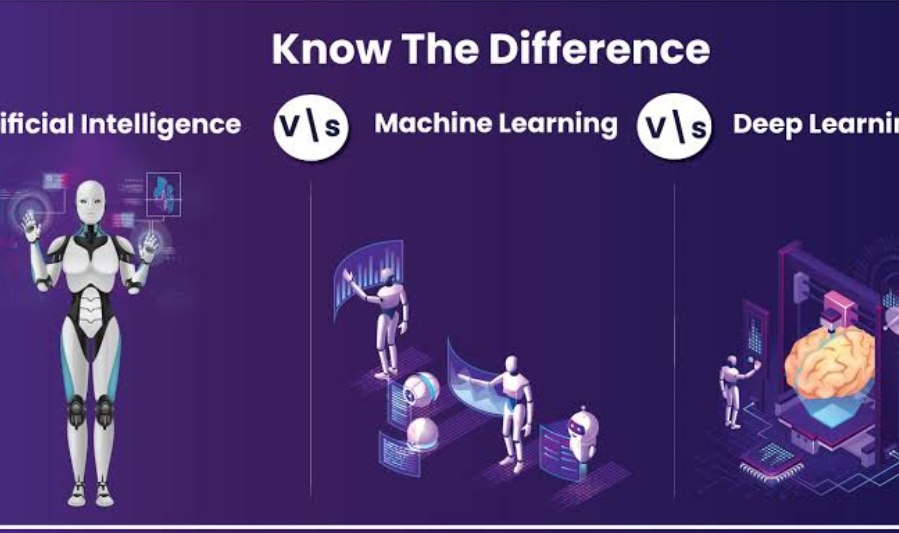
Machine Learning is a subset of Artificial Intelligence. While AI is the broader concept of creating machines that can simulate human intelligence, machine learning is one of the primary methods used to achieve AI capabilities.
Artificial Intelligence (AI)
Artificial Intelligence focuses on creating systems that can perform tasks requiring human-like intelligence, such as reasoning, problem-solving, decision-making, and language understanding.
Machine Learning (ML)
Machine Learning focuses specifically on enabling systems to learn from data and improve their performance without explicit programming.
How They Work Together
Machine learning provides the learning capability that allows many AI systems to become smarter and more effective over time. Modern AI applications such as recommendation systems, speech recognition, image recognition, virtual assistants, and predictive analytics rely heavily on machine learning techniques.
Key Difference
The main difference is that Artificial Intelligence is the broader field concerned with creating intelligent machines, whereas Machine Learning is a specific approach within AI that enables machines to learn from data and experience.
Conclusion
Machine Learning is a powerful technology that enables computers to learn, adapt, and improve through data analysis. As a core component of Artificial Intelligence, it plays a significant role in modern technological advancements and has become essential in solving complex real-world problems across various industries.
History of Machine Learning
Origins and Early Developments
Early Foundations
The origins of Machine Learning can be traced back to the fields of mathematics, statistics, and computer science. The idea of creating machines that could learn from experience emerged alongside the development of early computers in the mid-20th century. Researchers began exploring ways to enable computers to imitate human learning and decision-making processes.
Early Research in Artificial Intelligence
In the 1950s and 1960s, scientists working in Artificial Intelligence investigated methods that would allow computers to improve their performance through experience. Early machine learning research focused on pattern recognition, problem-solving, and computational models inspired by human cognition.
The First Learning Programs
One of the earliest machine learning programs was developed by Arthur Samuel in the 1950s. He created a computer program capable of playing checkers and improving its performance through experience. Samuel also popularized the term “Machine Learning,” defining it as the ability of computers to learn without being explicitly programmed.
Key Milestones in Machine Learning
Development of Neural Networks (1950s–1960s)
Researchers introduced early artificial neural networks inspired by the human brain. The Perceptron, developed by Frank Rosenblatt in 1957, became one of the first machine learning models capable of learning from data.
Growth of Statistical Learning (1970s–1980s)
During the 1970s and 1980s, machine learning increasingly incorporated statistical methods. Researchers developed algorithms for classification, prediction, and pattern recognition, laying the foundation for modern machine learning techniques.
Rise of Data Mining and Improved Algorithms (1990s)
The availability of larger datasets and more powerful computers led to significant advances in machine learning. Algorithms such as decision trees, support vector machines, and ensemble methods became widely used for solving practical problems.
Big Data and Deep Learning Revolution (2000s–Present)
The growth of the internet, cloud computing, and big data provided vast amounts of information for training machine learning models. Deep learning techniques, powered by artificial neural networks with multiple layers, achieved remarkable success in image recognition, speech processing, natural language understanding, and autonomous systems.
Modern Machine Learning Applications
Today, machine learning is used in recommendation systems, fraud detection, medical diagnosis, self-driving vehicles, cybersecurity, virtual assistants, and many other applications that impact everyday life.
Evolution from Traditional Programming to Learning Algorithms
Traditional Programming Approach
In traditional programming, developers write explicit instructions that tell a computer exactly how to perform a task. The system follows predefined rules and cannot adapt to new situations without additional programming.
Traditional Programming Model:
- Data + Rules → Output
This approach works well for clearly defined problems but becomes challenging when dealing with complex patterns or large amounts of data.
Introduction of Learning Algorithms
Machine learning introduced a new approach in which computers learn patterns directly from data instead of relying solely on manually written rules. By analyzing examples, machine learning models can make predictions and improve their performance over time.
Machine Learning Model:
- Data + Desired Output → Learning Algorithm → Rules (Model)
Once trained, the model can generate predictions for new data without requiring explicit programming for every scenario.
Advantages of Learning Algorithms
Learning algorithms offer several advantages over traditional programming:
- Ability to learn from experience.
- Adaptation to new data and changing environments.
- Improved performance over time.
- Efficient handling of large and complex datasets.
- Enhanced prediction and decision-making capabilities.
Impact on Modern Technology
The transition from traditional programming to learning algorithms has transformed the technology industry. It has enabled the development of intelligent systems capable of recognizing speech, understanding language, identifying images, predicting trends, and automating complex tasks. This evolution continues to drive innovation across numerous sectors worldwide.
Conclusion
The history of Machine Learning reflects decades of research and technological advancement. From early experiments in computer learning to modern deep learning systems, machine learning has evolved into one of the most influential technologies of the digital age. Its shift from rule-based programming to data-driven learning has opened new possibilities for innovation and problem-solving across industries.
How Machine Learning Works
Machine Learning (ML) follows a systematic process that enables computers to learn from data and make accurate predictions or decisions. The effectiveness of a machine learning system depends on the quality of data, the training process, and continuous evaluation of the model. The major stages of the machine learning workflow are described below.
3.1 Data Collection
Definition
Data collection is the first and most important step in the machine learning process. It involves gathering relevant data from various sources that will be used to train and test the machine learning model.
Sources of Data
Data can be collected from:
- Databases and data warehouses
- Websites and social media platforms
- Sensors and IoT devices
- Surveys and questionnaires
- Mobile applications and online services
Importance of Data Collection
The quality and quantity of collected data significantly influence the performance of a machine learning model. Accurate and diverse data helps the model learn meaningful patterns and make reliable predictions.
3.2 Data Preprocessing
Definition
Data preprocessing is the process of cleaning and transforming raw data into a format suitable for machine learning algorithms.
Key Preprocessing Tasks
Data Cleaning
This involves removing errors, duplicate records, and missing values from the dataset.
Data Transformation
Data is converted into a structured format that machine learning algorithms can understand.
Feature Selection
Relevant features or variables are selected to improve model performance and reduce complexity.
Data Normalization
Numerical values are scaled to a consistent range to ensure fair comparison among features.
Importance of Data Preprocessing
Proper preprocessing improves data quality, enhances model accuracy, and reduces training time.
3.3 Model Training
Definition
Model training is the stage where a machine learning algorithm learns patterns and relationships from the training data.
Training Process
During training, the algorithm analyzes input data and adjusts its internal parameters to minimize errors and improve predictions.
Common Training Algorithms
Examples of machine learning algorithms used for training include:
- Linear Regression
- Logistic Regression
- Decision Trees
- Random Forests
- Support Vector Machines (SVM)
- Neural Networks
Importance of Model Training
Effective training enables the model to identify meaningful patterns and generate accurate predictions when exposed to new data.
3.4 Model Testing and Evaluation
Definition
After training, the model is tested using separate data that was not used during training. This step evaluates how well the model performs on unseen data.
Evaluation Metrics
Accuracy
Measures the percentage of correct predictions made by the model.
Precision
Evaluates how many positive predictions are actually correct.
Recall
Measures the model’s ability to identify all relevant instances.
F1-Score
Provides a balanced measure of precision and recall.
Importance of Evaluation
Model evaluation helps determine whether the machine learning system is reliable, accurate, and ready for real-world use. It also identifies areas where improvements may be needed.
3.5 Prediction and Deployment
Prediction
Once the model has been successfully trained and evaluated, it can be used to make predictions on new data. These predictions help organizations make informed decisions and automate tasks.
Deployment
Deployment is the process of integrating the trained model into a real-world environment, such as a website, mobile application, business system, or cloud platform.
Monitoring and Maintenance
After deployment, the model must be continuously monitored to ensure optimal performance. As new data becomes available, the model may require retraining and updates to maintain accuracy.
Real-World Examples
Machine learning models are deployed in various applications, including:
- Recommendation systems
- Fraud detection systems
- Medical diagnosis tools
- Virtual assistants
- Autonomous vehicles
- Customer service chatbots
Types of Machine Learning
Machine Learning can be classified into different categories based on how algorithms learn from data. The three primary types of machine learning are Supervised Learning, Unsupervised Learning, and Reinforcement Learning. Each type has unique characteristics, applications, advantages, and limitations.
4.1 Supervised Learning
Definition
Supervised Learning is a type of machine learning in which the algorithm is trained using labeled data. In this approach, both the input data and the correct output are provided to the model during training. The goal is to learn the relationship between inputs and outputs so that the model can accurately predict outcomes for new data.
Examples
Common examples of supervised learning include:
- Email spam detection
- House price prediction
- Weather forecasting
- Medical diagnosis systems
- Credit risk assessment
Advantages
High Accuracy
When trained with high-quality labeled data, supervised learning models can achieve excellent prediction accuracy.
Clear Performance Measurement
The availability of correct outputs makes it easier to evaluate model performance.
Wide Range of Applications
Supervised learning is suitable for both classification and regression tasks.
Limitations
Requirement for Labeled Data
Obtaining labeled datasets can be expensive, time-consuming, and labor-intensive.
Risk of Overfitting
Models may perform well on training data but fail to generalize effectively to new data.
Limited Adaptability
The model’s performance depends heavily on the quality and quantity of training data.
4.2 Unsupervised Learning
Definition
Unsupervised Learning is a type of machine learning in which the algorithm learns from unlabeled data. Since no predefined outputs are provided, the model identifies hidden patterns, structures, and relationships within the data on its own.
Examples
Common examples of unsupervised learning include:
- Customer segmentation
- Market basket analysis
- Document clustering
- Anomaly detection
- Social network analysis
Use Cases
Customer Segmentation
Businesses use unsupervised learning to group customers based on purchasing behavior, preferences, and demographics.
Data Compression
Unsupervised learning techniques help reduce data dimensions while preserving important information.
Pattern Discovery
Organizations use these algorithms to uncover hidden trends and relationships within large datasets.
Fraud and Anomaly Detection
Unusual patterns in financial transactions or network activities can be identified using unsupervised learning methods.
Advantages
- Does not require labeled data.
- Can discover hidden structures and relationships.
- Useful for exploratory data analysis.
- Handles large datasets efficiently.
Limitations
- Results may be difficult to interpret.
- Lower accuracy compared to supervised learning in some tasks.
- Evaluation can be challenging because no correct outputs are available.
4.3 Reinforcement Learning
Definition
Reinforcement Learning is a type of machine learning in which an agent learns by interacting with its environment. The agent takes actions, receives feedback in the form of rewards or penalties, and gradually learns the best strategy to maximize cumulative rewards.
Reward-Based Learning
Learning Through Interaction
The agent continuously interacts with the environment and observes the outcomes of its actions.
Rewards and Penalties
Positive actions receive rewards, while undesirable actions receive penalties. These rewards guide the learning process.
Goal-Oriented Behavior
Over time, the agent develops an optimal policy that helps achieve long-term objectives and maximize rewards.
Real-World Applications
Robotics
Reinforcement learning enables robots to learn tasks such as navigation, object manipulation, and movement control.
Autonomous Vehicles
Self-driving vehicles use reinforcement learning to improve driving decisions and adapt to dynamic road conditions.
Gaming
Reinforcement learning has been successfully applied to strategy games, board games, and video games where AI agents learn to compete against human players.
Recommendation Systems
Online platforms use reinforcement learning to improve recommendations based on user interactions and feedback.
Resource Management
Industries apply reinforcement learning to optimize energy consumption, supply chains, and network operations.
Advantages
- Learns through experience and interaction.
- Suitable for dynamic and complex environments.
- Continuously improves performance over time.
- Effective for decision-making and control tasks.
Limitations
- Requires significant computational resources.
- Training can be time-consuming.
- Designing effective reward functions can be challenging.
- Performance may be unstable in highly complex environments.
Key Components of Machine Learning
Machine Learning systems rely on several fundamental components that work together to enable computers to learn from data and make accurate predictions or decisions. Understanding these components is essential for developing and evaluating effective machine learning solutions.
5.1 Algorithms
Definition
Algorithms are the mathematical and computational procedures that enable a machine learning system to learn patterns from data. They provide the rules and methods used to process information, identify relationships, and make predictions.
Types of Machine Learning Algorithms
Supervised Learning Algorithms
These algorithms learn from labeled data and are commonly used for classification and regression tasks. Examples include Linear Regression, Logistic Regression, Decision Trees, and Random Forests.
Unsupervised Learning Algorithms
These algorithms work with unlabeled data to discover hidden patterns and structures. Examples include K-Means Clustering and Principal Component Analysis (PCA).
Reinforcement Learning Algorithms
These algorithms learn through interaction with an environment by receiving rewards and penalties. They are commonly used in robotics, gaming, and autonomous systems.
Importance of Algorithms
Algorithms form the foundation of machine learning systems and determine how effectively a model learns from data and performs tasks.
5.2 Training Data
Definition
Training data is the dataset used to teach a machine learning model. It contains examples that help the model learn patterns, relationships, and behaviors required to perform a specific task.
Characteristics of Good Training Data
Accuracy
The data should be correct and free from significant errors.
Relevance
The dataset should be closely related to the problem being solved.
Diversity
A diverse dataset helps the model generalize well to new and unseen situations.
Sufficient Quantity
Large amounts of quality data generally improve model performance and learning capability.
Importance of Training Data
The quality of training data directly affects the accuracy and reliability of a machine learning model. Poor-quality data can lead to inaccurate predictions and biased outcomes.
5.3 Features and Labels
Features
Definition
Features are the input variables or characteristics used by a machine learning model to make predictions. They represent the information that the model analyzes during training and prediction.
Examples of Features
- Age of a customer
- Income level
- Temperature readings
- Product price
- Number of previous purchases
Labels
Definition
Labels are the target outputs or correct answers that a supervised learning model attempts to predict.
Examples of Labels
- Spam or Not Spam
- House Price
- Disease Diagnosis
- Customer Churn Status
- Product Category
Relationship Between Features and Labels
In supervised learning, features serve as inputs while labels serve as desired outputs. The model learns the relationship between features and labels to make future predictions.
5.4 Models
Definition
A model is the output of the machine learning training process. It represents the learned patterns and relationships within the data and can be used to make predictions on new data.
How Models Work
After training, the model applies the knowledge gained from the training data to analyze new inputs and generate predictions or decisions.
Types of Models
Regression Models
Used for predicting continuous numerical values such as prices or temperatures.
Classification Models
Used for predicting categories or classes, such as fraud detection or disease diagnosis.
Clustering Models
Used for grouping similar data points without predefined labels.
Importance of Models
The model is the core component that transforms data into actionable insights and predictions.
5.5 Evaluation Metrics
Definition
Evaluation metrics are measures used to assess the performance and effectiveness of a machine learning model. They help determine how accurately the model performs on unseen data.
Common Evaluation Metrics
Accuracy
Measures the proportion of correct predictions made by the model.
Precision
Measures how many predicted positive cases are actually correct.
Recall
Measures the ability of the model to identify all relevant positive cases.
F1-Score
Provides a balanced evaluation by combining precision and recall.
Mean Squared Error (MSE)
Measures the average squared difference between predicted and actual values in regression problems.
Importance of Evaluation Metrics
Evaluation metrics help developers compare models, identify weaknesses, and select the most effective so
Popular Machine Learning Algorithms
Machine Learning algorithms are the core techniques that enable computers to learn patterns from data and make predictions or decisions. Different algorithms are designed for different types of problems, such as prediction, classification, clustering, and pattern recognition. The following are some of the most widely used machine learning algorithms.
6.1 Linear Regression
Definition
Linear Regression is a supervised learning algorithm used to predict continuous numerical values. It establishes a linear relationship between one or more independent variables and a dependent variable.
How It Works
The algorithm fits a straight line through the data points to minimize prediction errors and estimate future values.
Applications
- House price prediction
- Sales forecasting
- Stock market trend analysis
- Demand prediction
Advantages
- Simple and easy to implement
- Easy to interpret results
- Works well with linear relationships
Limitations
- Assumes a linear relationship between variables
- Sensitive to outliers
- Less effective for complex datasets
6.2 Logistic Regression
Definition
Logistic Regression is a supervised learning algorithm used for classification problems. It predicts the probability that a data point belongs to a particular category.
How It Works
Instead of predicting continuous values, logistic regression estimates probabilities and classifies data into categories such as “Yes” or “No.”
Applications
- Spam email detection
- Disease diagnosis
- Customer churn prediction
- Credit risk assessment
Advantages
- Simple and efficient
- Provides probability estimates
- Performs well on binary classification tasks
Limitations
- Less effective for highly complex relationships
- Requires sufficient training data
- Sensitive to irrelevant features
You may also like to read these posts:
Artificial Intelligence: Shaping the Future of Humanity
Understanding Machine Learning and Its Real-World Applications
6.3 Decision Trees
Definition
Decision Trees are supervised learning algorithms that make decisions by splitting data into branches based on specific conditions or rules.
How It Works
The algorithm creates a tree-like structure consisting of nodes and branches. Each decision node represents a feature, while branches represent possible outcomes.
Applications
- Loan approval systems
- Medical diagnosis
- Customer segmentation
- Risk analysis
Advantages
- Easy to understand and visualize
- Handles both numerical and categorical data
- Requires minimal data preparation
Limitations
- Can become overly complex
- Prone to overfitting
- May be sensitive to small data changes
6.4 Random Forest
Definition
Random Forest is an ensemble learning algorithm that combines multiple decision trees to improve prediction accuracy and reduce overfitting.
How It Works
Instead of relying on a single decision tree, Random Forest creates many trees and combines their predictions through voting or averaging.
Applications
- Fraud detection
- Stock market prediction
- Medical diagnosis
- Recommendation systems
Advantages
- High accuracy
- Reduces overfitting
- Handles large datasets effectively
Limitations
- More computationally intensive
- Less interpretable than a single decision tree
- Requires more memory
6.5 Support Vector Machines (SVM)
Definition
Support Vector Machines (SVM) are supervised learning algorithms used for classification and regression tasks. They aim to find the optimal boundary that separates different classes of data.
How It Works
SVM identifies a hyperplane that maximizes the distance between different categories, improving classification performance.
Applications
- Image classification
- Face detection
- Text categorization
- Bioinformatics
Advantages
- Effective in high-dimensional datasets
- Works well with smaller datasets
- Strong classification performance
Limitations
- Computationally expensive for large datasets
- Difficult to interpret
- Requires careful parameter tuning
6.6 K-Nearest Neighbors (KNN)
Definition
K-Nearest Neighbors (KNN) is a supervised learning algorithm that classifies data based on the similarity of nearby data points.
How It Works
The algorithm identifies the K nearest neighbors of a new data point and assigns the most common class among them.
Applications
- Recommendation systems
- Pattern recognition
- Image classification
- Customer segmentation
Advantages
- Simple and easy to understand
- No training phase required
- Effective for smaller datasets
Limitations
- Slow with large datasets
- Sensitive to irrelevant features
- Performance depends on selecting the appropriate value of K
6.7 Neural Networks
Definition
Neural Networks are machine learning models inspired by the structure and functioning of the human brain. They consist of interconnected layers of artificial neurons that process information.
How It Works
Neural networks learn complex patterns by adjusting connections between neurons during training. Multiple hidden layers allow the network to model intricate relationships within data.
Applications
- Image recognition
- Speech recognition
- Natural Language Processing (NLP)
- Autonomous vehicles
- Medical image analysis
Advantages
- Handles highly complex problems
- Learns nonlinear relationships effectively
- Excellent performance with large datasets
Limitations
- Requires significant computational resources
- Needs large amounts of training data
- Often difficult to interpret and explain
Comparison of Popular Machine Learning Algorithms
| Algorithm | Learning Type | Primary Use | Strength |
|---|---|---|---|
| Linear Regression | Supervised | Prediction | Simplicity |
| Logistic Regression | Supervised | Classification | Probability Estimation |
| Decision Trees | Supervised | Classification & Regression | Easy Interpretation |
| Random Forest | Supervised | Classification & Regression | High Accuracy |
| SVM | Supervised | Classification | Strong Boundary Separation |
| KNN | Supervised | Classification | Simplicity |
| Neural Networks | Supervised/Deep |
Faqs:
What is Machine Learning?
Machine Learning is a branch of Artificial Intelligence that allows computers to learn from data and improve their performance without being explicitly programmed.
How does Machine Learning work?
Machine Learning works by training algorithms on large datasets, identifying patterns, and using those patterns to make predictions or decisions.
What are the main types of Machine Learning?
The three main types are Supervised Learning, Unsupervised Learning, and Reinforcement Learning.
Where is Machine Learning used in real life?
Machine Learning is used in healthcare, banking, e-commerce, social media, cybersecurity, transportation, and many other industries.
What are the benefits of Machine Learning?
Machine Learning improves accuracy, automates tasks, enhances decision-making, analyzes large data quickly, and helps businesses grow efficiently.
Conclusion
Machine Learning has become a core technology in the modern digital world, enabling systems to learn from data and make intelligent decisions without human intervention. It is transforming industries such as healthcare, finance, education, transportation, and e-commerce by improving accuracy, efficiency, and innovation.
Although Machine Learning offers many benefits, it also comes with challenges like data privacy, bias in algorithms, and high computational costs. Addressing these issues is important for building reliable and responsible systems.