

Introduction to Data Science
What is Data Science?
Data Science is an interdisciplinary field that combines statistics, mathematics, computer science, and domain knowledge to extract meaningful insights from data. It involves collecting, organizing, analyzing, and interpreting large amounts of structured and unstructured data to support decision-making and solve real-world problems. Data Science uses techniques such as data mining, machine learning, and data visualization to discover patterns and trends hidden within data.
Importance of Data Science in the Modern World
Data Science has become one of the most important fields in today’s digital age because almost every activity generates data. Organizations use data science to understand customer behavior, improve services, and increase efficiency.
Its importance can be seen in several ways:
- It helps businesses make informed, data-driven decisions.
- It improves efficiency by identifying patterns and optimizing processes.
- It supports innovation by discovering new opportunities in data.
- It enhances prediction capabilities in areas such as healthcare, finance, and marketing.
- It reduces risks by analyzing trends and detecting anomalies early.
How Data is Changing Industries and Decision-Making
Data is transforming the way industries operate and make decisions. Companies no longer rely only on intuition; instead, they use data-driven insights to guide strategies and operations.
In industries such as healthcare, data helps predict diseases and improve patient care. In finance, it is used for fraud detection and risk analysis. In retail and e-commerce, data helps personalize recommendations and improve customer experience. In transportation, it supports route optimization and traffic management.
Overall, data is enabling faster, more accurate, and more reliable decision-making. Organizations that effectively use data science are better positioned to compete, innovate, and grow in the modern digital economy.
History of Data Science
Early Use of Statistics and Data Analysis
The roots of Data Science can be traced back to statistics, which has been used for centuries to collect, analyze, and interpret data. Early statisticians developed methods to understand population trends, economic patterns, and scientific observations. In the 18th and 19th centuries, pioneers such as Ronald Fisher and other early researchers laid the foundation for modern statistical analysis by introducing concepts like hypothesis testing, experimental design, and probability theory. These methods allowed researchers to make informed conclusions from data long before computers existed.
Evolution of Computing and Databases
The development of computers in the mid-20th century significantly transformed data analysis. With the invention of electronic computers, it became possible to store, process, and analyze large amounts of information more efficiently than manual methods.
During this period, database systems were introduced to organize and manage structured data. Technologies such as relational databases allowed data to be stored in tables and accessed using query languages like SQL. This advancement enabled businesses and governments to manage growing volumes of information systematically and reliably.
Rise of Big Data and Modern Data Science
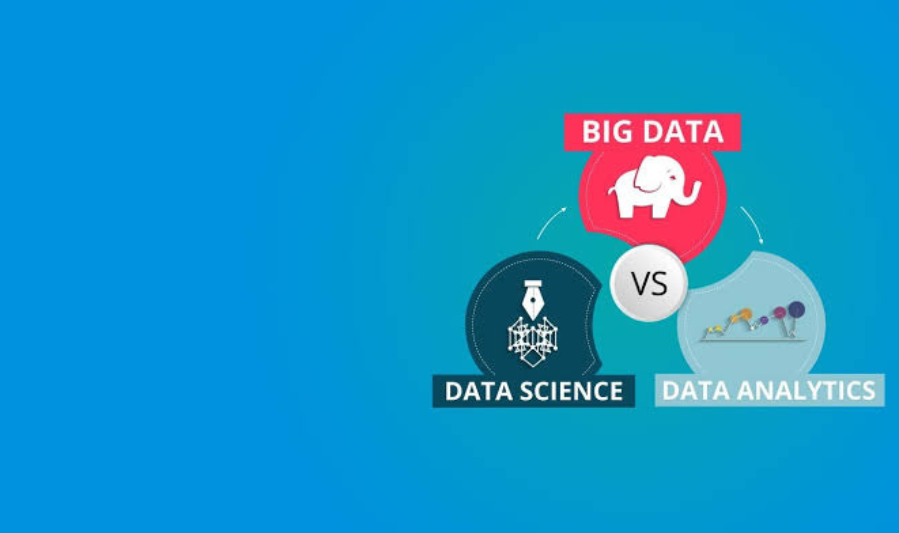
In the late 20th and early 21st centuries, the rapid growth of the internet, social media, and digital technologies led to an explosion of data generation. This era is known as the Big Data era, characterized by extremely large, fast, and diverse datasets that traditional tools could not handle effectively.
Modern Data Science emerged as a response to these challenges by combining statistics, computer science, and machine learning. Tools and frameworks were developed to process massive datasets, extract insights, and support decision-making in real time. Technologies such as distributed computing, cloud platforms, and advanced analytics made it possible to analyze complex data at scale.
Today, Data Science is a key driver of innovation in industries such as healthcare, finance, retail, transportation, and technology. It continues to evolve as new methods, algorithms, and tools are developed to handle increasingly complex and large-scale data problems.
Conclusion
The history of Data Science shows a gradual evolution from traditional statistical methods to advanced computational techniques powered by Big Data and artificial intelligence. This progression has transformed how data is collected, processed, and used, making Data Science one of the most influential fields in the modern digital era.
What is Data Science?
Definition and Core Concept
Data Science is a multidisciplinary field that focuses on extracting knowledge, insights, and meaningful patterns from data. It combines techniques from statistics, mathematics, computer science, and domain expertise to analyze both structured and unstructured data. The core concept of Data Science is to transform raw data into actionable insights that can support decision-making, prediction, and problem-solving in real-world scenarios.
Data Science involves processes such as data collection, cleaning, analysis, visualization, and modeling using methods like machine learning and statistical techniques.
Difference Between Data, Information, and Insights
Data
Data refers to raw, unprocessed facts and figures. It has no meaning on its own and can include numbers, text, images, or measurements. For example, a list of temperatures recorded over a week is raw data.
Information
Information is processed and organized data that has context and meaning. When data is structured and interpreted, it becomes useful information. For example, calculating the average temperature of the week provides meaningful information.
Insights
Insights are deeper understandings derived from analyzing information. They reveal patterns, trends, or relationships that help in decision-making. For example, identifying that rising temperatures are linked to increased energy consumption is an insight.
Role of Data Scientists
Data Collection and Cleaning
Data scientists gather data from various sources and clean it by removing errors, inconsistencies, and missing values to ensure accuracy.
Data Analysis and Interpretation
They analyze data using statistical methods and machine learning techniques to identify patterns and trends.
Model Building
Data scientists build predictive models that help forecast outcomes, classify data, or detect anomalies.
Data Visualization
They present findings through charts, graphs, and dashboards to make complex data easier to understand.
Decision Support
Data scientists help organizations make informed decisions by providing data-driven insights that improve efficiency, performance, and strategy.
Conclusion
Data Science is the process of turning raw data into meaningful insights that guide decision-making. By distinguishing between data, information, and insights, and understanding the role of data scientists, we can better appreciate how this field drives innovation and supports modern industries.
Data Science Process (Lifecycle)
The Data Science lifecycle is a structured process used to turn raw data into meaningful insights and actionable solutions. Each stage plays a critical role in ensuring that data-driven decisions are accurate, reliable, and effective.
4.1 Problem Definition
Definition
Problem definition is the first and most important step in the Data Science lifecycle. It involves clearly identifying the business or research problem that needs to be solved.
Key Activities
- Understanding objectives and goals
- Identifying stakeholders
- Defining success criteria
- Formulating questions to be answered
Importance
A well-defined problem ensures that the entire project remains focused and aligned with expected outcomes.
4.2 Data Collection
Definition
Data collection involves gathering relevant data from multiple sources required to solve the defined problem.
Sources of Data
- Databases and data warehouses
- APIs and web scraping
- Surveys and questionnaires
- Sensors and IoT devices
- Transaction and log files
Importance
High-quality and relevant data is essential for accurate analysis and model building.
4.3 Data Cleaning and Preparation
Definition
Data cleaning and preparation involve transforming raw data into a usable format by removing errors, inconsistencies, and missing values.
Key Activities
- Handling missing values
- Removing duplicates
- Correcting inconsistencies
- Formatting and standardizing data
- Feature engineering
Importance
Clean data improves the accuracy and reliability of analytical models.
4.4 Exploratory Data Analysis (EDA)
Definition
Exploratory Data Analysis (EDA) is the process of analyzing data to understand its patterns, trends, and relationships using statistical and visual methods.
Techniques Used
- Descriptive statistics (mean, median, mode)
- Data visualization (graphs, charts, histograms)
- Correlation analysis
- Pattern identification
Importance
EDA helps in understanding data structure and identifying important features before building models.
4.5 Model Building
Definition
Model building involves selecting and applying machine learning algorithms to train models using prepared data.
Key Steps
- Selecting appropriate algorithms
- Splitting data into training and testing sets
- Training the model
- Tuning hyperparameters
Importance
This stage creates predictive or analytical models that solve the defined problem.
4.6 Model Evaluation
Definition
Model evaluation assesses the performance and accuracy of the trained model using unseen data.
Evaluation Metrics
- Accuracy
- Precision
- Recall
- F1-score
- Mean Squared Error (MSE)
Importance
Evaluation ensures that the model performs well and meets required standards before deployment.
4.7 Deployment and Monitoring
Definition
Deployment is the process of implementing the model into a real-world environment where it can be used for predictions and decision-making.
Key Activities
- Integrating model into applications or systems
- Using APIs for real-time predictions
- Monitoring model performance
- Updating and retraining the model when needed
Importance
Continuous monitoring ensures the model remains accurate and effective over time.
Conclusion
The Data Science lifecycle is a systematic process that transforms raw data into valuable insights. From defining the problem to deploying and monitoring models, each stage is essential for building reliable and impactful data-driven solutions in real-world applications.
Key Components of Data Science
Data Science is built on several core components that work together to extract meaningful insights from data and support decision-making. Each component plays a unique role in the overall data science process.
Statistics and Mathematics
Role in Data Science
Statistics and mathematics form the foundation of Data Science. They provide the tools and techniques needed to analyze data, identify patterns, and make predictions.
Key Areas
- Descriptive statistics (mean, median, mode)
- Probability theory
- Inferential statistics
- Linear algebra
- Calculus
Importance
These concepts help data scientists understand data distributions, test hypotheses, build models, and evaluate results accurately.
Programming Skills
Role in Data Science
Programming is essential for handling large datasets, implementing algorithms, and automating data analysis tasks.
Common Programming Languages
- Python
- R
- SQL
Importance
Programming enables data scientists to clean data, build machine learning models, and create data visualization tools efficiently.
Data Engineering
Role in Data Science
Data engineering focuses on collecting, storing, and processing large volumes of data so that it can be used effectively for analysis.
Key Activities
- Building data pipelines
- Managing databases
- Data integration from multiple sources
- Ensuring data quality and scalability
Importance
Without proper data engineering, raw data cannot be efficiently transformed into usable formats for analysis and modeling.
Machine Learning
Role in Data Science
Machine learning allows systems to learn from data and make predictions or decisions without being explicitly programmed.
Key Techniques
- Supervised learning
- Unsupervised learning
- Reinforcement learning
Importance
Machine learning enhances the ability of data science to automate predictions, detect patterns, and solve complex problems.
Domain Knowledge
Role in Data Science
Domain knowledge refers to understanding the specific field or industry where data science is applied, such as healthcare, finance, or marketing.
Importance
- Helps in defining relevant problems
- Ensures meaningful interpretation of results
- Improves decision-making accuracy
- Supports better feature selection and model design
Examples
- In healthcare: understanding medical terms and patient data
- In finance: knowledge of markets and risk factors
- In marketing: understanding customer behavior and trends
Tools and Technologies in Data Science
Data Science relies on a wide range of tools and technologies that help in collecting, processing, analyzing, and visualizing data. These tools enable data scientists to work efficiently with large datasets and build accurate analytical models.
Programming Languages (Python, R)
Python
Python is one of the most widely used programming languages in Data Science due to its simplicity and powerful libraries. It offers extensive support for data analysis, machine learning, and visualization.
Popular Python libraries:
- Pandas (data manipulation)
- NumPy (numerical computing)
- Matplotlib and Seaborn (data visualization)
- Scikit-learn (machine learning)
R
R is a programming language specifically designed for statistical analysis and data visualization. It is widely used in academic research and data-heavy industries.
Key features of R:
- Strong statistical capabilities
- Advanced graphical tools
- Extensive package ecosystem
Databases (SQL, NoSQL)
SQL Databases
Structured Query Language (SQL) databases store data in structured tables with rows and columns. They are highly efficient for handling structured data.
Examples:
- MySQL
- PostgreSQL
- Microsoft SQL Server
NoSQL Databases
NoSQL databases are designed for unstructured or semi-structured data and provide flexibility and scalability.
Examples:
- MongoDB
- Cassandra
- Redis
Visualization Tools (Tableau, Power BI)
Tableau
Tableau is a powerful data visualization tool used to create interactive dashboards and reports. It helps users understand complex data through visual representation.
Power BI
Power BI, developed by Microsoft, allows users to connect to multiple data sources and create interactive visual dashboards for business intelligence.
Importance of Visualization Tools
- Simplify complex data
- Improve decision-making
- Enable interactive reporting
- Help identify trends and patterns
Big Data Tools (Hadoop, Spark)
Hadoop
Hadoop is an open-source framework used for distributed storage and processing of large datasets across clusters of computers.
Apache Spark
Apache Spark is a fast and general-purpose cluster computing system used for big data processing and real-time analytics.
Importance of Big Data Tools
- Handle large-scale data efficiently
- Enable distributed computing
- Support real-time data processing
- Improve speed and scalability of data operations
Cloud Platforms (AWS, Azure, Google Cloud)
Amazon Web Services (AWS)
AWS provides scalable cloud computing services for storage, processing, and machine learning applications.
Microsoft Azure
Azure offers cloud-based tools for data storage, analytics, and AI model deployment.
Google Cloud Platform (GCP)
GCP provides powerful data analytics, machine learning services, and scalable infrastructure for data science projects.
Importance of Cloud Platforms
- Scalable computing resources
- Cost-effective data storage
- Easy deployment of models
- Support for big data and AI workloads
Conclusion
Tools and technologies in Data Science play a crucial role in transforming raw data into valuable insights. From programming languages and databases to big data frameworks and cloud platforms, these tools enable efficient data processing, analysis, and visualization, making modern data-driven decision-making possible.
You may also like to read these posts:
Artificial Intelligence: Shaping the Future of Humanity
Understanding Machine Learning and Its Real-World Applications
Understanding Data Science and Its Real-World Applications
Types of Data in Data Science
Data in Data Science is categorized based on its structure and format. Understanding these types of data is essential because different analytical techniques and tools are used depending on how the data is organized.
Structured Data
Definition
Structured data is highly organized data that follows a predefined format, typically stored in rows and columns within databases or spreadsheets.
Characteristics
- Easily searchable and organized
- Stored in relational databases
- Follows a fixed schema (structure)
- Easy to analyze using SQL and traditional tools
Examples
- Customer information in a database
- Financial records
- Employee details in HR systems
- Sales transactions
Importance
Structured data is easy to process and analyze, making it ideal for reporting, business intelligence, and traditional data analysis.
Unstructured Data
Definition
Unstructured data is data that does not follow a predefined format or structure. It is often complex and difficult to organize using traditional database systems.
Characteristics
- No fixed schema
- Difficult to store in relational databases
- Requires advanced processing techniques
- Often large in volume
Examples
- Text documents and emails
- Images and videos
- Social media posts
- Audio recordings
Importance
Unstructured data contains valuable insights such as customer opinions, behavior patterns, and multimedia information that can be analyzed using machine learning and AI techniques.
Semi-Structured Data
Definition
Semi-structured data lies between structured and unstructured data. It does not follow a strict table format but contains tags, markers, or metadata that help organize the data.
Characteristics
- Partially organized
- Flexible format
- Contains tags or key-value pairs
- Easier to process than unstructured data but more complex than structured data
Examples
- JSON (JavaScript Object Notation) files
- XML files
- Email headers
- Log files from servers
Importance
Semi-structured data is widely used in modern applications because it offers flexibility while still allowing partial organization for analysis and processing.
Faqs:
What is Data Science?
Data Science is a field that combines statistics, programming, and domain knowledge to analyze data and extract useful insights for decision-making.
What does a Data Scientist do?
A Data Scientist collects, processes, and analyzes data to find patterns, build predictive models, and help organizations make smarter decisions.
What skills are required for Data Science?
Key skills include programming (Python or R), statistics, data visualization, machine learning, and knowledge of tools like SQL, Tableau, or Power BI.
Where is Data Science used in real life?
Data Science is used in healthcare, finance, e-commerce, education, marketing, transportation, and many other industries for analysis and prediction.
Is Data Science a good career choice?
Yes, Data Science is a highly in-demand and rewarding career with strong job growth, good salaries, and opportunities in almost every industry.
Conclusion
Data Science has become one of the most powerful fields in the modern digital era, helping organizations turn raw data into meaningful insights. It plays a key role in improving decision-making, increasing efficiency, and driving innovation across industries such as healthcare, finance, education, and business.
Although Data Science offers many opportunities, it also comes with challenges like data privacy, data quality issues, and a shortage of skilled professionals. Overcoming these challenges is essential for its responsible and effective use.